
OSVI Healthcare Blog
Cardiac Care at Home
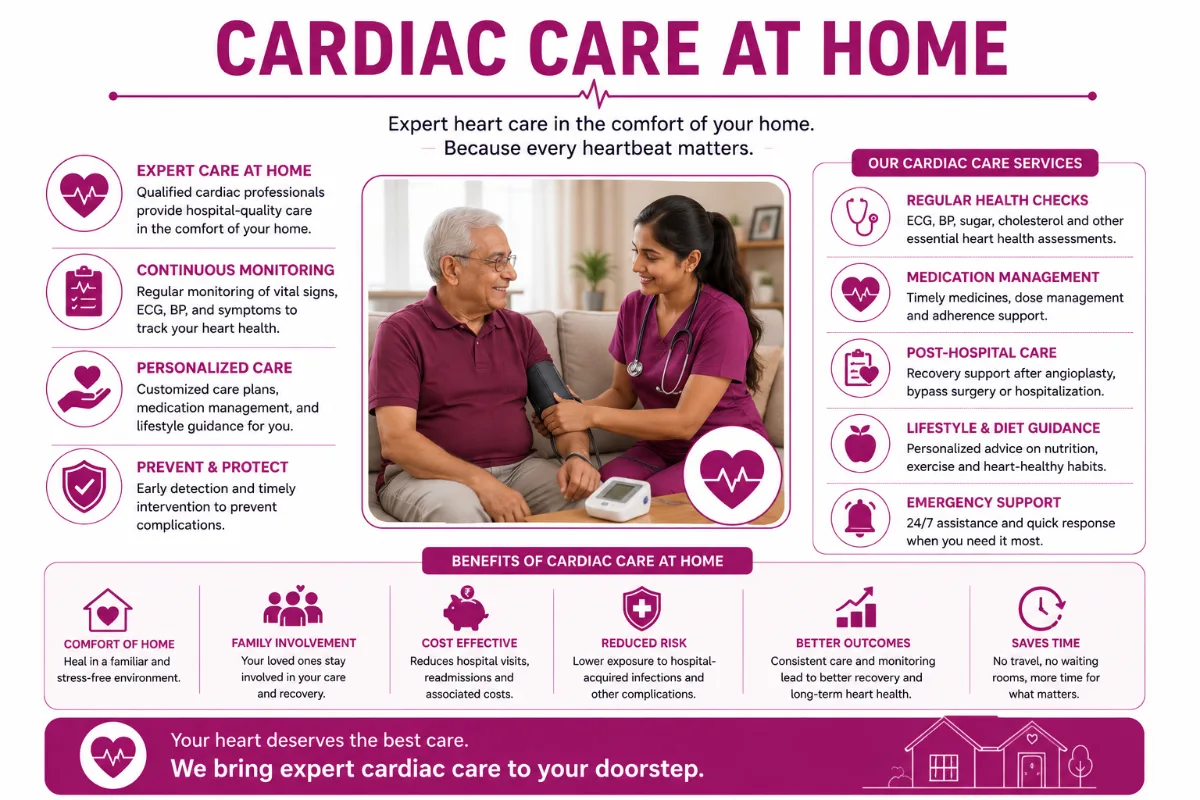
Coming home after a heart attack, a heart procedure or a hospital stay is a relief, but it also brings questions. What should we check every day? When do we call the doctor, and when do we call 112? This guide is for families looking after a heart patient at home. Always follow the plan the treating doctor gives you.
Who May Need Heart Care at Home?
Much of heart recovery happens at home. This often includes people who:
- Have recently had a heart attack
- Have had an angioplasty with a stent, or heart bypass surgery
- Live with heart failure, where the heart does not pump as well as it should
- Have an irregular heartbeat (arrhythmia) that the doctor is treating or monitoring
Heart Attack Warning Signs: Call 112 Straight Away
- Chest pain, pressure, heaviness or squeezing, which may spread to the arm, neck, jaw or back
- Shortness of breath
- Sweating, feeling sick or vomiting, or a feeling like indigestion
- Dizziness, or pale, blue or grey skin
Symptoms differ from person to person, and a second heart attack can feel different from the first. Women more often have breathlessness, nausea, back or jaw pain, or unusual tiredness. Call 112 straight away, even if you are not sure. The patient should not drive to hospital. See also what to do in a medical emergency at home.
Heart Failure: Signs to Tell the Doctor About
- Weight going up quickly over a day or a few days
- New or worse swelling in the feet, ankles, legs or tummy
- Breathlessness when lying flat, needing more pillows, or waking at night short of breath
- More breathlessness with everyday activity, or a cough that does not go away
- Feeling very tired or dizzy, or a pulse that is very slow, very fast or not regular
Call 112 if the patient is gasping or cannot get words out, the lips or skin turn pale, blue or grey, or the patient collapses or is not responding normally.
Daily Checks the Doctor May Ask For
Weight: heart failure patients are often asked to weigh themselves every morning, after using the toilet and before eating, on the same scale. A quick rise can mean fluid is building up. MedlinePlus, for example, advises calling the doctor for a gain of more than 1 kg in a day or 2 kg in a week, but your doctor may set a different limit.
Blood pressure and pulse: if the doctor asks for home readings:
- Use a good-quality upper-arm monitor, and ask the nurse or doctor to check your technique.
- No food, tea, coffee or smoking for 30 minutes before. Empty the bladder first.
- Sit for 5 minutes with the back supported and feet flat, the arm resting on a table at chest height. Do not talk.
- Take at least two readings, 1 or 2 minutes apart, at the same times each day.
- For the pulse, count the beats at the wrist for 30 seconds and double the number.
Write the date, time, readings and any symptoms in a notebook and show it at every doctor’s visit.
Medicines, Food and Fluids
Give every medicine exactly as prescribed. Do not stop, skip or change a dose unless the doctor says so, even if the patient feels well. After a stent, stopping blood-thinning medicines early can greatly increase the risk of a heart attack. A pill organiser and a written medicine list help, and tell the doctor about any side effects.
Salt makes the body hold on to fluid, so heart failure patients are often asked to eat less of it, and some are asked to limit how much they drink. These limits differ for each patient, so follow the doctor or dietitian, and ask about salty foods such as pickles, papad and namkeen.
Getting Active Again and Cardiac Rehabilitation
Many patients can start gentle walking soon and build up slowly. Ask the doctor for a safe plan for stairs, lifting, driving and work. For example, the NHS advises no heavy lifting for 3 months after bypass surgery.
Ask about cardiac rehabilitation: a medically supervised programme of exercise, heart-healthy education and help with stress, commonly offered after a heart attack, heart surgery or angioplasty, and for heart failure. If the doctor agrees, a physiotherapist at home can help the patient follow the exercise plan.
Feeling worried or low after a heart event is common. If it lasts, tell the doctor, as help is available.
Heart Tests That Can Be Done at Home
- ECG: a quick, painless test that records the heart’s electrical activity, including its rate and rhythm.
- Holter monitor: a small recorder worn for usually 24 to 48 hours that records the heart rhythm during normal daily life.
- Echocardiogram (echo): an ultrasound scan that shows how well the heart is working and helps diagnose problems such as heart failure and valve disease.
These tests are done when the doctor asks for them. Read more about X-ray, ECG and ABG at home.
How OSVI Healthcare Helps Heart Patients at Home
Cardiac care is part of our home care services. A care manager is your one point of contact, and the care plan is supervised by a qualified doctor.
- Doctor visits: a general physician or specialist at home, day or night, with a prescription and follow-up.
- Nursing: verified nurses and attendants for hourly, 12-hour or 24-hour shifts, including ICU nurses.
- Tests: ECG, Holter and echo at home, with reports reviewed by OSVI doctors, and home blood sample collection.
- Physiotherapy: certified physiotherapists, including for heart conditions, visit the home.
Our team is available 24×7. In an emergency, call 112 first.
Frequently Asked Questions
How often should we check blood pressure and weight?
Ask the doctor. Heart failure patients are often asked to weigh themselves every morning, and the doctor will say how often to check blood pressure and which readings to report.
Can we stop a medicine if the patient feels better?
No. Do not stop or change any heart medicine without the doctor’s advice.
What if the chest pain comes back?
Call 112 straight away if it feels like a heart attack, or if you are not sure. If the doctor has prescribed a medicine for chest pain, use it exactly as advised.
How long is a Holter monitor worn?
Usually 24 to 48 hours, sometimes up to 7 days, as the doctor decides. The patient cannot bathe or shower while wearing it.
Need a Doctor for a Heart Patient at Home?
Book a doctor visit at home for a check-up, a review of medicines and follow-up care.
Book a Doctor Visit at HomeThis article is provided for general information and does not constitute medical advice, diagnosis or treatment. Every patient’s situation is different, so please consult a qualified doctor for guidance specific to you. In a medical emergency, call 112.