
OSVI Healthcare Blog
Physiotherapy at Home: Benefits, Conditions Treated and Recovery
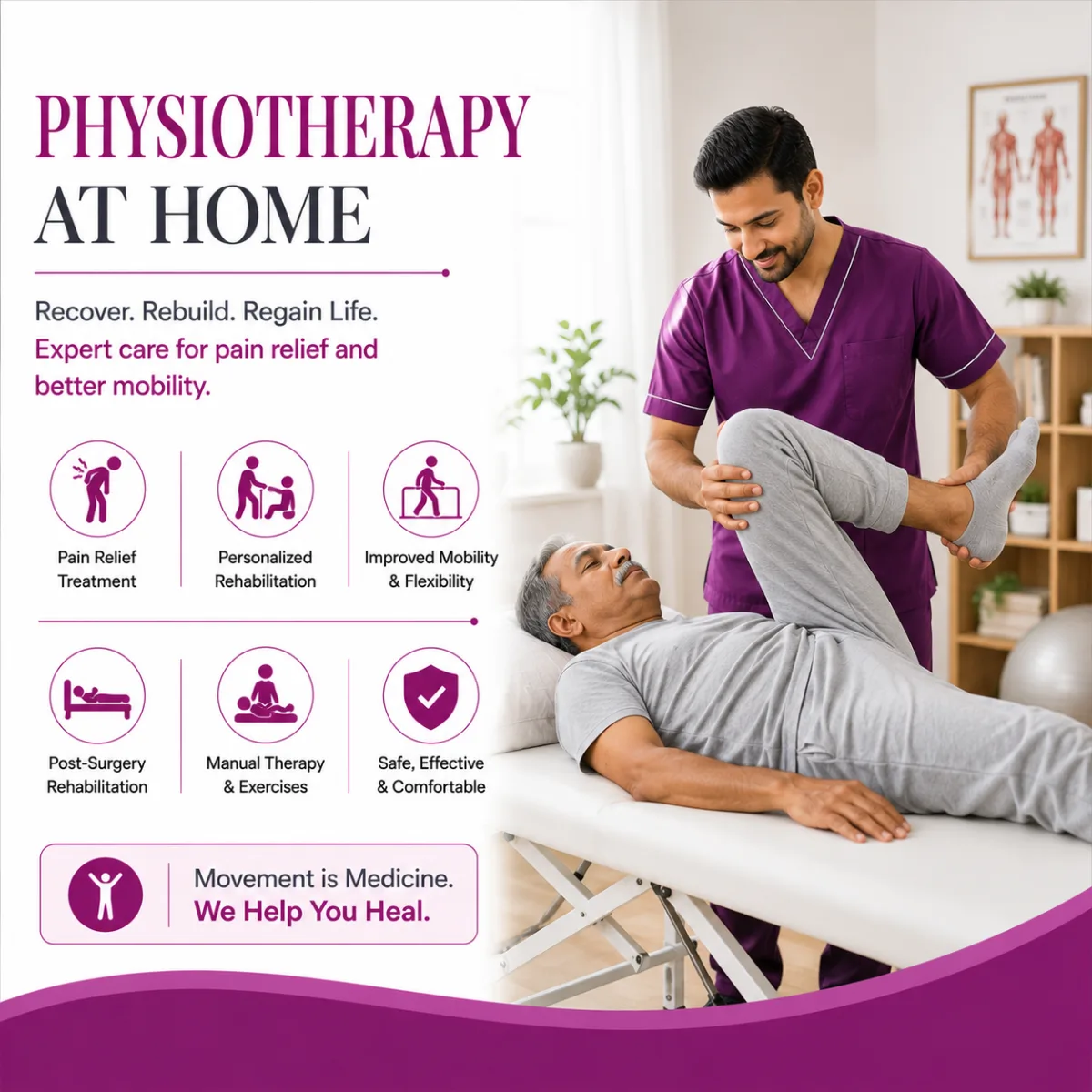
Physiotherapy helps people move better, ease pain and rebuild strength after an injury, an operation or an illness. When getting to a clinic is hard, for example after a hip operation, a stroke or a long stay in hospital, a physiotherapist can come to the patient’s home. Therapy at home also fits the patient’s real day: getting out of their own bed, walking to their own bathroom, climbing their own stairs.
Who Can Benefit from Physiotherapy at Home?
- After surgery or a fracture: for example after a hip or knee replacement, to regain strength and movement. Read more about care after a fracture at home.
- Stroke and other nerve conditions: such as Parkinson’s disease or multiple sclerosis, to work on movement, strength and balance. See our guide to stroke patient care at home.
- Back pain, neck pain and arthritis: and other bone, joint and muscle problems.
- Older adults with weak legs or poor balance: especially after a fall, or when the family worries about one. Read about elderly care at home.
- After a long illness or an ICU stay: muscles can become weak while a patient is very ill and in bed. Read about ICU at home.
- Breathing problems: such as COPD or asthma, where a physiotherapist can teach breathing exercises and ways to clear mucus from the chest.
- Heart conditions: such as recovery after a heart attack, within the plan the cardiologist advises.
What Happens at the First Visit
- Questions: the physiotherapist asks about symptoms, medical history and daily life. Keep the discharge summary, operation notes, recent X-ray reports and the medicine list ready.
- Checks: they look at movement, strength, balance and pain, and watch how the patient gets out of bed, stands up from a chair and walks.
- Goals: together you set simple, real goals, such as walking to the bathroom alone or managing the stairs.
- Treatment and a home plan: sessions may include exercises, hands-on therapy and advice. The patient usually gets a short set of exercises to do between visits.
Feeling tired after a session is common. Tell the physiotherapist if an exercise feels too hard or too easy, so the plan can be adjusted.
Preparing the Home
- Clear a space to exercise. Remove loose rugs, wires and clutter that could trip the patient.
- Keep a sturdy, stable chair or a wall close by for balance exercises.
- Put a non-slip mat in the bathroom, and consider grab rails in the bathroom and safety rails on steps.
- Choose well-fitting footwear with a good grip, not loose slippers.
- After a hip or knee operation, keep daily things on one floor, limit stair use, and use a bed low enough for the feet to touch the floor when sitting on its edge.
If the physiotherapist suggests a walker, a commode chair or a hospital bed, read our guide to renting or buying medical equipment.
How Families Can Help Between Sessions
- Encourage the daily exercises exactly as the physiotherapist taught them. Doing them regularly early in recovery matters.
- Stay close during walking and balance practice, but let the patient do what the physiotherapist has said is safe for them.
- Learn safe ways to help. Ask the physiotherapist to show you how to help the patient stand up, sit down and turn in bed.
- Avoid long periods of sitting still, unless the doctor has advised otherwise.
- Keep a simple diary of exercises done, pain, dizziness and any fall, and show it at the next visit.
- Give medicines only as the doctor advises. Do not change pain medicine on your own.
When to Stop and Call the Doctor or 112
Stop the exercise and rest if the patient feels dizzy or light-headed, has chest pain, an irregular heartbeat, unusual breathlessness or nausea. Tell the doctor, even if it settles.
Call the doctor soon if, after an operation or a fracture, there is pain, swelling, redness or tenderness in one leg, especially the calf or thigh; if the wound oozes pus; if there is a fever or shivering; or if pain keeps getting worse instead of better.
Call 112 straight away if:
- chest pain does not go away with rest, or breathing is very difficult
- a painful, swollen leg comes with breathlessness or chest pain
- there are signs of a stroke: the face drops on one side, the person cannot lift both arms, or speech is slurred
- after a fall, the person may have hurt the head, neck, back or hip, or cannot get up (do not try to lift them yourself)
- back pain comes with weakness or numbness in both legs, or new problems controlling the bladder or bowels
Our guide on what to do in a medical emergency at home explains the next steps.
How OSVI Healthcare Helps with Physiotherapy at Home
Physiotherapy at home is part of OSVI Healthcare’s Home Care services. Experienced, certified physiotherapists visit the patient at home and work with musculoskeletal, neurological and cardiovascular conditions. Our team can also arrange:
- Nurses and attendants at home for hourly, 12-hour or 24-hour shifts, to help with daily care between sessions.
- A doctor visit at home, with a prescription and follow-up.
- X-ray and other tests at home, when the doctor asks for them.
- Medical equipment such as hospital beds, delivered and set up at home.
A care manager is your single point of contact, care plans are supervised by a qualified doctor, and the team is available 24×7.
Frequently Asked Questions
How many physiotherapy sessions will be needed?
It depends on the condition, the patient’s goals and how recovery goes. The physiotherapist checks progress at each visit and adjusts the plan. Recovery after a hip replacement, for example, can take several months.
When can exercises start after surgery?
Ask the surgeon before discharge. Many patients start moving soon after an operation, but some movements may need to be avoided for a while. The physiotherapist follows the surgeon’s advice.
Can physiotherapy help an elderly parent who keeps falling?
Strength and balance exercises can help reduce the risk of falls. Tell the doctor about every fall too, because the cause, such as a medicine side effect or low blood pressure, may need checking.
Is it normal to feel sore after physiotherapy?
Feeling tired after a session is common. Tell the physiotherapist about pain that is new, sharp or getting worse, and stop if any of the warning signs above appear.
Need Physiotherapy at Home?
Connect with OSVI Healthcare to arrange a physiotherapist and other home care for your loved one.
Explore Home Care ServicesThis article is provided for general information and does not constitute medical advice, diagnosis or treatment. Every patient’s situation is different, so please consult a qualified doctor for guidance specific to you. In a medical emergency, call 112.