
OSVI Healthcare Blog
Nursing Care at Home: When Do You Need a Professional Nurse?
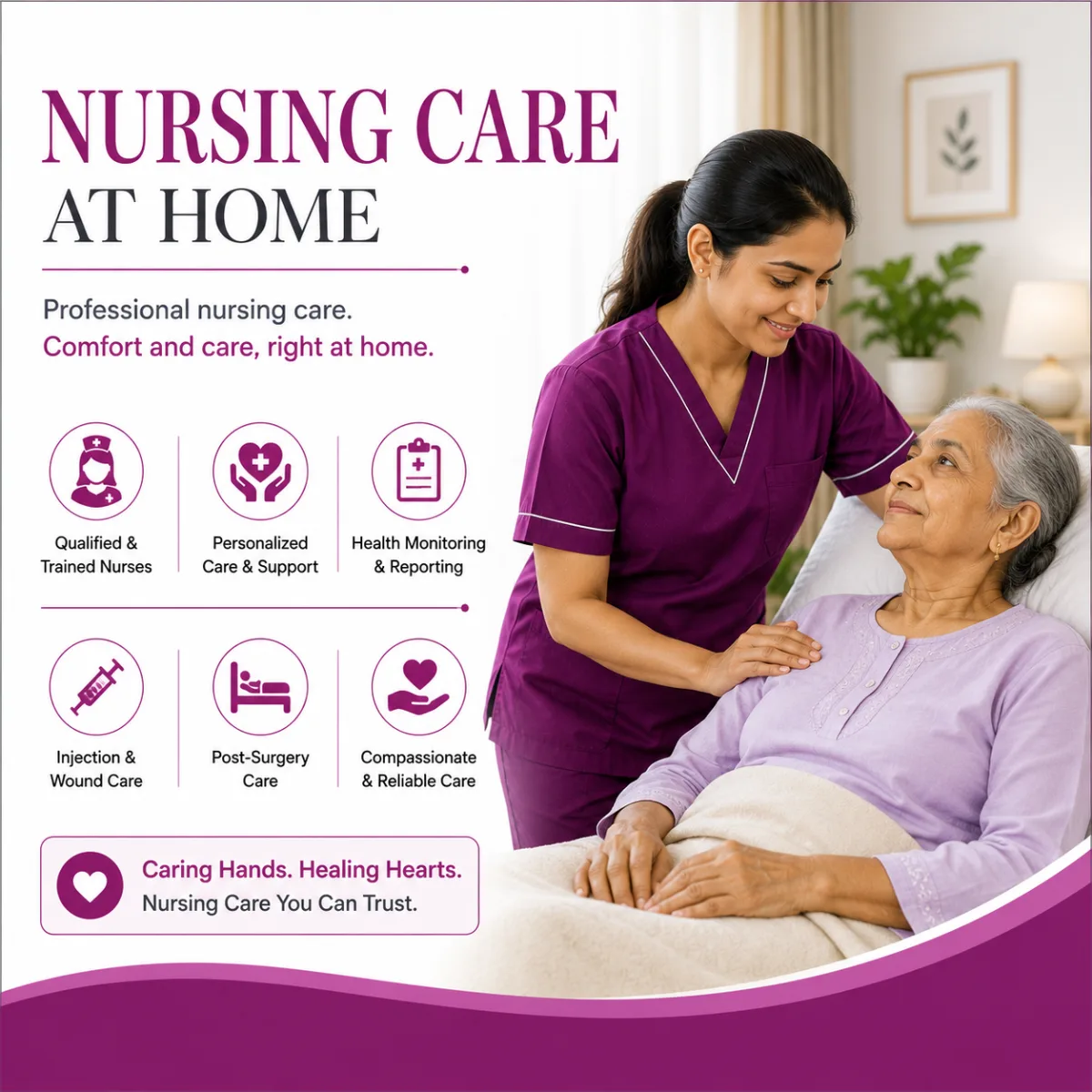
When a family member comes home from hospital, the first question is often: do we need a nurse, or can we manage ourselves? Going home does not always mean the medical care is over. Some patients still need wound dressings, injections or regular checks, best done by a trained nurse following the doctor’s plan. This guide helps you decide who should care for your loved one, and what to check before you hire.
Nurse, Attendant or Family: Who Does What?
- Trained nurse: handles the medical side of care, such as wounds, medicines, injections, catheters and checking vital signs, as the doctor advises.
- Attendant (GDA, general duty assistant): helps with daily personal care, such as bathing, dressing, feeding, toileting and moving around. An attendant does not do medical tasks.
- Family: gives company and comfort, and can learn simple tasks from the nurse. Family carers need breaks too, or they become exhausted.
Many families use a mix: a nurse for medical tasks, and an attendant or family for the rest.
What a Home Nurse Can Do
Depending on the patient’s needs and the doctor’s instructions, a home nurse can:
- Dress wounds, including surgical wounds, and watch for signs of infection
- Give injections and IV medicines or fluids, as prescribed by the doctor
- Care for a urinary catheter and a feeding tube, and keep the skin around them clean
- Check blood pressure, pulse, temperature, oxygen level and blood sugar, and keep a written record for the doctor
- Give medicines on time, exactly as prescribed
- Change the position of a bed-bound patient regularly and check the skin, to help prevent bedsores
- Teach the family how to do simple tasks safely
For patients who need ICU-level care at home, OSVI Healthcare provides ICU nurses.
Signs Your Family May Need a Nurse
- The patient has come home after surgery or a hospital stay with a wound, drain, catheter, feeding tube or IV line.
- The doctor has prescribed injections or IV medicines at home, or wants vital signs checked and recorded regularly.
- The patient cannot move much in bed and is at risk of bedsores.
- The patient has a serious long-term illness and needs symptom care, including palliative care at home.
If the patient mainly needs help with bathing, eating and moving around, an attendant may be enough. Ask the treating doctor if you are unsure.
Hourly, 12-Hour or 24-Hour: Choosing the Shift
- Hourly visit: suits a single task, such as a dressing change, an injection or a catheter check.
- 12-hour shift (day or night): suits patients who need several care tasks through the day, or watching at night while the family sleeps.
- 24-hour care: suits patients who are very unwell, fully bed-bound or need ICU-level care.
Needs change as the patient recovers, so review the shift regularly with the doctor and adjust it.
Questions to Ask Before You Hire
- What training and qualification does the nurse have?
- Has the nurse been background-verified? Will they carry an identity card?
- Has the nurse cared for patients with this condition before?
- Who supervises the nurse, and who do we call at night or in an emergency?
- What happens if the nurse is on leave, or if we are not happy?
How to Prepare the Home
- If possible, set up the patient’s bed on the ground floor or entry level, with a toilet or commode on the same floor.
- Clear the way from bed to bathroom: remove loose rugs, wires and clutter. Use a non-slip mat in the bathroom and consider grab rails.
- Keep doorways well lit and use night lights in dark rooms and passages.
- Keep soap, water and clean towels near the patient. Everyone, including the nurse, should wash hands before touching a wound, catheter or feeding tube.
- Keep the discharge summary, prescriptions and reports in one file for the nurse and doctor.
- Arrange any medical equipment the doctor has advised, such as a hospital bed or air mattress, before the patient arrives.
When to Call the Doctor or 112
Call the doctor straight away if a wound becomes red, sore, hot or swollen, or has pus coming out of it, or opens; if there is fever; if urine becomes cloudy or bad-smelling, has blood in it, or the catheter stops draining or leaks; or if a feeding tube comes out, gets blocked, or the skin around it becomes red or leaks.
Call 112 straight away for severe difficulty breathing, chest pain or tightness, blue or grey lips or skin, sudden confusion, signs of a stroke (face drooping, arm weakness, slurred speech), or if the patient collapses or does not respond normally. See what to do in a medical emergency at home.
How OSVI Healthcare’s Nursing Service Works
With nursing care at home from OSVI Healthcare, you can choose trained nurses, attendants (GDA), or both, for hourly, 12-hour or 24-hour shifts, including ICU nurses.
- One point of contact. A care manager is your one point of contact, and the care plan is supervised by a qualified doctor.
- Background-verified staff. Every nurse is background-verified before being placed with a family.
- Replacement if you are not happy. If the nurse is not the right fit, we replace them.
- 24×7 support. Our care team is available day and night.
If the patient also needs a doctor visit at home, tests at home such as an X-ray or ECG, blood tests at home or physiotherapy at home, we can arrange these too. See all our home care services.
Frequently Asked Questions
What is the difference between a nurse and an attendant?
A trained nurse handles medical care. An attendant (GDA) helps with bathing, dressing, feeding and moving around, but does not do medical tasks.
Can a home nurse give injections or IV drips?
Yes, a trained nurse can give injections and IV medicines or fluids, but only as a doctor has prescribed. Keep the prescription at home.
Can a home nurse change the medicines or the dose?
No. The nurse gives medicines exactly as the doctor has prescribed. Any change has to come from the doctor.
Do we need a nurse for 24 hours?
Not always. Many patients need only an hourly visit or a 12-hour shift. Decide with the treating doctor, and review it as the patient recovers.
Need a Nurse at Home?
Tell us about the patient, and we will arrange a verified nurse or attendant for the shift you need.
Explore Nursing Care at HomeThis article is provided for general information and does not constitute medical advice, diagnosis or treatment. Every patient’s situation is different, so please consult a qualified doctor for guidance specific to you. In a medical emergency, call 112.