
OSVI Healthcare Blog
Oxygen Therapy at Home: What Patients and Families Should Know
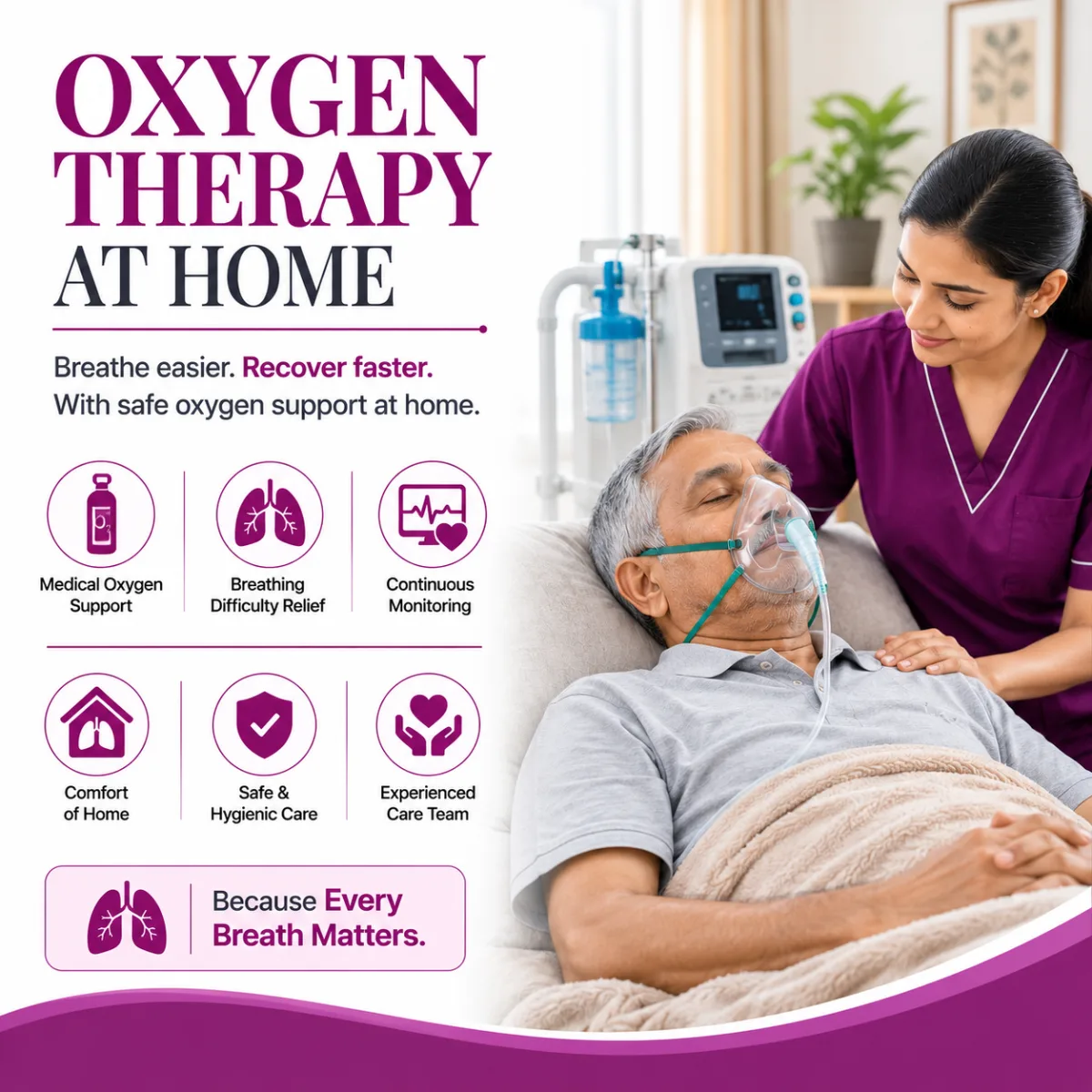
Oxygen therapy gives extra oxygen to people whose lungs or heart cannot keep the oxygen level in the blood high enough on their own. Many patients use it at home: some for a few weeks while they recover from an illness, others for months or longer because of a long-term lung or heart condition. Oxygen is a medicine. How much is given, for how many hours a day and with which device is decided by the doctor. This guide explains what families should know before and after the equipment arrives.
When Is Oxygen Needed at Home?
A doctor may prescribe oxygen at home when tests show that the patient’s oxygen level stays low. Common reasons include:
- Long-term lung disease, such as COPD or interstitial lung disease (lung fibrosis)
- Recovery after a severe chest infection, such as pneumonia, or after a stay in hospital
- Advanced heart failure
- Low oxygen levels with breathlessness in serious illness, as part of palliative care at home
To decide, the doctor checks the oxygen level with a pulse oximeter (SpO2) and sometimes with an arterial blood gas (ABG) test, which can also be done at home. The prescription should say the oxygen flow (in litres per minute), how many hours a day it is needed (for example during sleep, during activity, or most of the day) and the target oxygen range for that patient. If a reading looks low, speak to the doctor before starting oxygen.
Concentrator, Cylinder or Portable Unit?
- Oxygen concentrator: a machine that takes in room air and concentrates the oxygen in it. It runs on electricity and does not run out, so it suits patients who need oxygen for many hours a day. Home models commonly give up to 5 or 10 litres per minute.
- Oxygen cylinder: stored oxygen that needs no electricity. It is useful as a backup during power cuts and for patients who need oxygen only for short periods, but it runs out and has to be refilled or replaced.
- Portable oxygen concentrator: a smaller, battery-powered machine for moving around or travelling. Many give oxygen in pulses rather than a continuous flow, so ask the doctor whether it suits the patient.
Power cuts are common in many cities. If the patient depends on a concentrator, keep a backup cylinder ready, and check beforehand whether your inverter can run the concentrator, as many models draw a lot of power.
Checking Oxygen Levels with a Pulse Oximeter
- Let the patient sit and rest for a few minutes before checking.
- Use a warm finger, and remove nail polish or artificial nails from that finger.
- Keep the hand still and wait until the number is steady.
- Write down the reading, the time and the oxygen flow, and share this record with the doctor.
- Oximeters can be less accurate with cold hands or on darker skin, so also watch how the patient looks and feels, not only the number.
The doctor will tell you the target range for the patient. It is not the same for everyone: for some patients with long-term lung disease, a lower target is safer. Do not raise or lower the oxygen flow on your own. Too little oxygen is harmful, and for some patients too much oxygen can also be harmful.
When to Call the Doctor or 112
Call the doctor if the readings stay below the target range, the patient is more breathless than usual, has a new fever or cough, has headaches on waking, or is sleepier than usual during the day.
Call 112 straight away for severe breathlessness, blue or grey lips or face, sudden confusion, if the patient is very drowsy or hard to wake, has chest pain, or cannot speak in full sentences.
Oxygen Safety at Home
Oxygen does not burn by itself, but it makes a fire start more easily and burn faster. These simple steps keep the home safe:
- No smoking in the home. Keep oxygen equipment and tubing at least 3 metres (about 10 feet) away from open flames and heat: the gas stove, diyas, candles, incense and heaters. Do not cook on a gas stove while the oxygen is on.
- Do not use oil-based creams or petroleum jelly on the face or nose. For a dry nose, ask the doctor or nurse about a water-based product.
- Keep the concentrator in a well-ventilated place, a little away from walls and curtains, and not inside a cupboard.
- Keep cylinders upright in their stand or trolley so they cannot fall, and away from heat and direct sunlight.
- Lay the tubing so that nobody trips over it, especially an elderly patient.
- If a humidifier bottle is used, wash it and refill it with distilled or sterile water, not tap water, as the supplier instructs.
- Change the nasal cannula or mask and the tubing as advised, and clean the concentrator’s filter regularly.
- Put a “No smoking: oxygen in use” sign at the door, and keep emergency numbers near the patient.
How OSVI Healthcare Sets Up Oxygen at Home
OSVI Healthcare provides oxygen concentrators and cylinders for home use, on rent or to buy. This is how it works:
- Share the doctor’s prescription. We need it before delivering oxygen equipment, so that the set-up matches what the doctor advised.
- Same-day delivery. The equipment is delivered and set up at your home on the same day.
- Set-up and demonstration. A trained technician sets up the equipment and shows the family how to use it, clean it and check it safely.
- 24×7 support. If the equipment has a problem, call us at any time, day or night.
If you do not have a prescription yet, start with the treating doctor, or book a doctor visit at home. If the patient also needs nursing care at home or tests at home, our team can arrange these too.
Frequently Asked Questions
Do we need a prescription for oxygen at home?
Yes. Oxygen is a medicine, and the doctor decides the flow, the hours per day and the target oxygen range. OSVI Healthcare delivers oxygen equipment against a doctor’s prescription.
Should we rent or buy an oxygen concentrator?
Renting usually makes sense for a short-term need, such as recovery after an illness; buying may suit long-term use. Read our guide to renting or buying medical equipment.
What should we do during a power cut?
Switch to the backup cylinder at the flow the doctor prescribed. If you rely on an inverter, check beforehand that it can run the concentrator.
Can we increase the oxygen if the patient feels more breathless?
Not without medical advice. Call the doctor. If the breathlessness is severe, or the lips or face turn blue or grey, call 112.
Is oxygen safe to use at home?
Yes, when it is prescribed by a doctor and used with the safety steps above, especially keeping flames, smoking and oil-based creams away.
Need Oxygen Equipment at Home?
Share the doctor’s prescription, and we will deliver and set it up at your home the same day.
Explore Medical Equipment at HomeThis article is provided for general information and does not constitute medical advice, diagnosis or treatment. Every patient’s situation is different, so please consult a qualified doctor for guidance specific to you. In a medical emergency, call 112.