
OSVI Healthcare Blog
Benefits of Home Healthcare
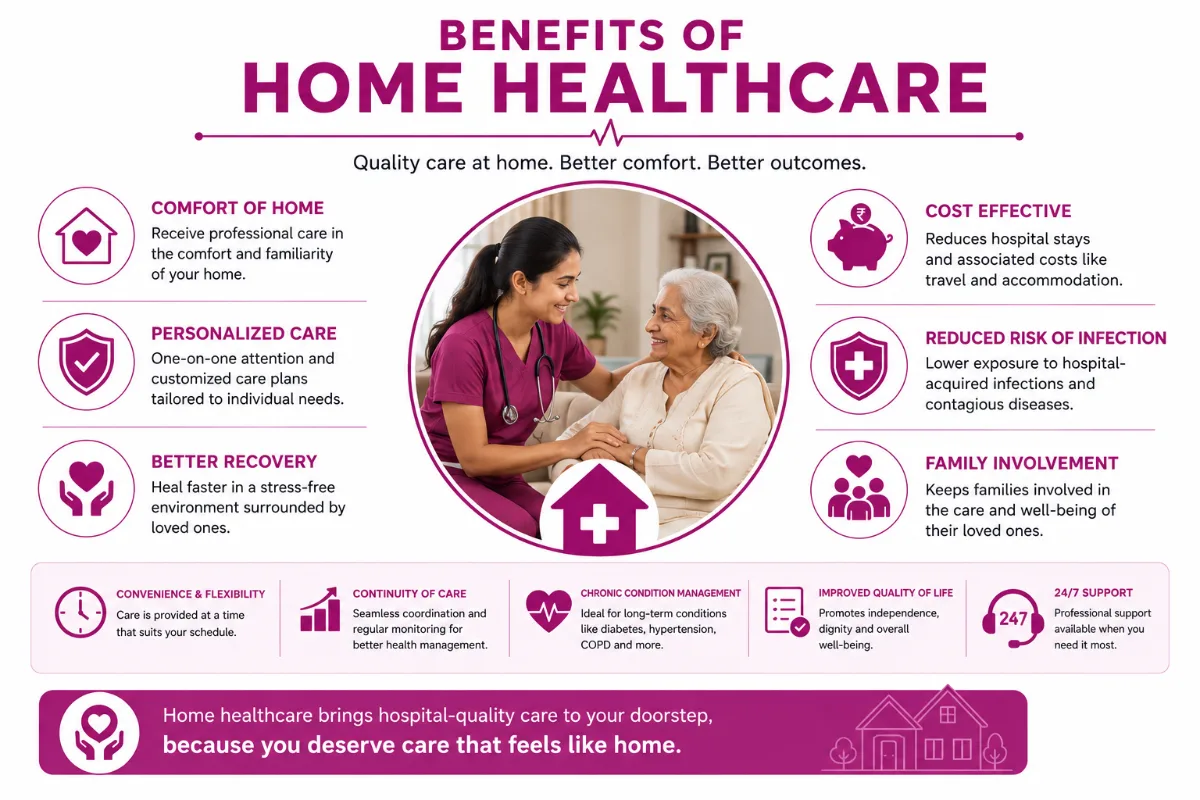
Home healthcare means medical, nursing and personal care given in the patient’s own home instead of a hospital or clinic. It can be short-term, for example while someone recovers after an operation, or long-term, for people who need ongoing help. For the right patient, it brings care to the bedside and keeps the family close. This guide explains what it can include, who it suits, and how to plan it.
What Home Healthcare Can Include
- Nursing care: giving medicines as prescribed, wound care, help with medical equipment and, when the doctor prescribes it, fluids through a drip. See nursing care at home.
- Doctor visits: a doctor examines the patient at home, prescribes treatment and follows up. See doctor consultations at home.
- Physiotherapy: exercises to help the patient move and regain strength, for example after a stroke, a fracture or surgery.
- Tests at home: blood samples and many diagnostics, such as ECG and X-ray.
- Medical equipment: a hospital bed, an air mattress or oxygen, when the doctor advises it.
- Personal care: help with bathing, dressing, eating and getting from the bed to a chair.
- ICU at home: for selected patients who need long-term intensive support, when the treating doctor agrees it is safe.
Benefits for the Right Patient
- Familiar surroundings. Most people prefer to stay in their own home, with their own bed, food and routine.
- Family stays involved. Family members can be with the patient, learn how to help, and take part in decisions.
- One-to-one attention. A nurse or attendant on a shift looks after one patient, so small changes are more likely to be noticed.
- Fewer trips for tests. Travelling to a hospital or lab and waiting there can be tiring for a frail or bedbound patient.
- Infection risk. Infections can be picked up during a hospital stay, but home care is not free of this risk either, so clean hands matter at home too.
Research reviews of “hospital at home” programmes, mostly for older patients in other countries, found that for carefully selected patients, treatment at home gave similar results to a hospital stay on risk of death and readmission, and patients may be more satisfied. These programmes had a doctor in charge and the option of moving to hospital when needed.
Who Home Healthcare Suits
- Patients recovering after surgery or a hospital stay, once the doctor says they are stable enough to go home
- People with long-term conditions who need regular nursing or check-ups, such as after a stroke or with heart disease
- Older adults who need help with daily activities or find it hard to travel (see elderly care at home)
- People with a serious illness where comfort is the main aim, as part of palliative care at home
- Selected patients for whom the doctor agrees that ICU at home is safe
When Hospital Is Still the Right Choice
Some needs can only be met in a hospital: surgery, many scans and procedures, and close round-the-clock monitoring of a patient whose condition is unstable. If the doctor advises admission, follow that advice. Home care works best with a clear plan for moving the patient to hospital if they get worse.
Call 112 straight away if the patient has:
- Chest pain, pressure or tightness
- Signs of a stroke: the face drooping on one side, arm weakness, or slurred speech
- Severe breathlessness, choking, or difficulty speaking in full sentences
- Sudden confusion, a seizure (fit), or is unconscious and cannot be woken
- Heavy bleeding, or sudden swelling of the lips, mouth, throat or tongue
See what to do while help is on the way in our guide to a medical emergency at home.
Planning Home Care with the Doctor
Before care starts, ask the treating doctor:
- What care does the patient need, and for how long?
- Is a nurse needed, an attendant, or both? For how many hours a day?
- How often should a doctor review the patient?
- Which medicines, tests and equipment are needed?
- Which signs mean we call the doctor, and which mean we call 112? Which hospital should we go to?
Keep a written list of all the patient’s medicines, including vitamins and over-the-counter products, and show it to every doctor and nurse. Review the plan with the doctor as needs change. Never change a medicine or its dose on your own: always do as the doctor advises.
Making the Home Safe for Care
- Clear clutter, loose wires and rugs, especially on the way to the bathroom.
- Fix poor lighting, including at night, and loose stair railings.
- Use a non-slip bathroom mat and consider grab rails.
- Choose well-fitting footwear with a good grip.
- Wash hands before and after caring for the patient or handling wounds.
- Keep the medicine list and the doctor’s and emergency numbers near the patient.
How OSVI Healthcare Coordinates Care at Home
OSVI Healthcare brings the parts of home care together:
- One point of contact: a care manager, with care plans supervised by a qualified doctor.
- Nurses and attendants: background-verified, for hourly, 12-hour or 24-hour shifts, including ICU nurses, with a replacement if you are not happy.
- Doctors: physicians and specialists visit day or night, with follow-up, or you can book an online consultation.
- Physiotherapy: certified physiotherapists visit the home (read about physiotherapy at home).
- Tests and equipment: lab tests at home with reports on WhatsApp and email, and medical equipment delivered and set up.
- 24×7 support, including emergency care at home.
Frequently Asked Questions
Is home healthcare as safe as a hospital?
For suitable patients with a clear care plan, a doctor in charge and a plan for reaching hospital if needed, it can be a safe option. It is not right for every patient: the treating doctor decides with the family.
Is home healthcare cheaper than staying in hospital?
It depends on the care needed: hours of nursing, equipment, tests and doctor visits. Ask for a clear care plan so you know what is included before care starts.
What should we do if the patient gets worse at night?
Call the doctor or the care team. For emergency signs such as chest pain, signs of a stroke or severe breathlessness, call 112.
Book Home Healthcare Services with OSVI Healthcare
Nursing, doctor visits, physiotherapy, tests and equipment at home, coordinated by one care manager.
Explore Home Care ServicesThis article is provided for general information and does not constitute medical advice, diagnosis or treatment. Every patient’s situation is different, so please consult a qualified doctor for guidance specific to you. In a medical emergency, call 112.